Conceptual example of the Controls Category results when a listed V6.0/LUNA V2.0 product model number is searched for on the SSL QPL.
The DesignLights Consortium (DLC) recently released Version 6.0 of its Solid-State Lighting (SSL) Technical Requirements, the first major update in over five years, as well as Version 2.0 of Light Usage for Night Applications (LUNA), the DLC program designed to promote responsible outdoor lighting. The updates recognize advances in LED technology while promoting controllability as a strong path to energy savings.
Based on an updated version of EE201: Daylight-responsive Lighting Control, a course in NEMA Academy, this article describes a process for designing and applying lighting control solutions that utilize daylight-responsive lighting controls.
The primary legacy source for general lighting in most school spaces is fluorescent. These can be replaced by LED products for 20 to 60 percent energy savings, greater longevity, controllability, and improved quality of light. A lighting upgrade is the ideal time to install advanced lighting controls to enhance energy savings and flexibility in light levels and color.
Welcome to the Lighting Controls Academy! The LCA has a new name, a refreshed website, and some terrific new features to support lighting controls education.
Commercial building energy codes regulate the design of nonresidential buildings to minimize energy consumption. While the majority of U.S. states adopt model codes and standards, the State of California developed its own code: Title 24, Part 6 of the state’s Building Standards Code. The latest version was released in 2025 and will take effect January 1, 2026.

Image courtesy of BetterBricks
As the market for replacing traditional light sources with LED becomes more challenging, a new market is developing around upgrade of early-generation LED installations. This presents an opportunity to achieve greater energy savings, enhance lighting quality, and integrate advanced lighting controls. Supported by a small number of new commercial lighting rebates that are likely to expand in availability, this trend appears certain to grow.

DLC Decision Tree identifying existing building projects suitable for NLC-HVAC integration.
In February 2025, the DesignLights Consortium (DLC) released a new resource to facilitate integration between networked lighting controls (NLC) and heating, ventilation, and air-conditioning (HVAC) systems. The NLC-HVAC Integration Toolkit includes tools and guidance applicable to new and existing construction projects. The toolkit’s goal is to support maximized energy savings with integration by ensuring clear project team communication.
For 25 years, the Lighting Controls Association, a council of NEMA, has educated the building industry about lighting control technology and application, notably through its Education Express courses. We are proud to announce that starting May 1, 2025, the Education Express curriculum will be incorporated into a new learning management system, NEMA Academy.
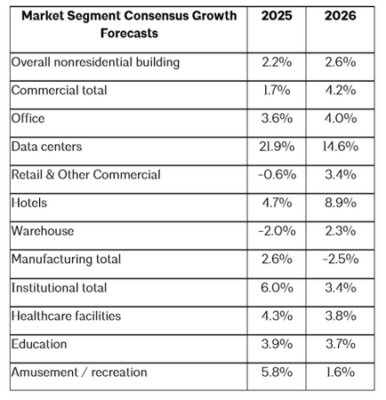
While major construction indicators ended the year as a mixed bag of caution and optimism, the AIA Construction Consensus Forecast Panel forecasted that nonresidential construction spending will slow to 2.2% growth in 2025 and 2.6% in 2026.
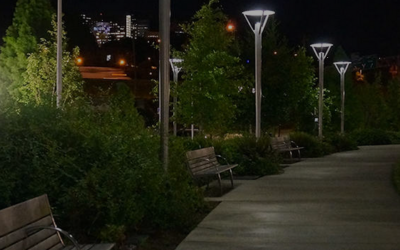
Saving energy while reducing skyglow, light trespass, and glare, lighting controls have emerged as a critical component of responsible outdoor lighting. In this article, we’ll make the case.
In August 2024, the International Code Council published the 2024 version of the IECC, which has been updated every three years since 2000. As with previous iterations of the IECC, this new version reduces lighting power allowances, expands mandatory controls requirements, and issues clarifications.
Based on EE105: Lighting Control System Design, a new course in the Lighting Controls Association’s Education Express program, this article provides detailed information about designing an effective lighting control solution.
In Part 1 of this Lighting Controls System Design series, we learned about key documentation including the Content Intent Narrative (CIN), Sequence of Operations (SOO), and Owner Project Requirements (OPR). The next step in design development is to turn these requirements and conceptual design into a realized design
In Part 3 of this series on how to design a lighting control system, we will discuss installation and post-occupancy. You will learn about bidding, responding to questions from installers, reviewing submittals and defending your design, following-through with the installation of the equipment, functional testing, training essential staff, and ultimately ensuring the owner is satisfied.
It’s an LED world now; traditional sources are just living in it. The next frontier of energy savings lies in bringing the lighting controls revolution to mainstream adoption in existing buildings via best practices.
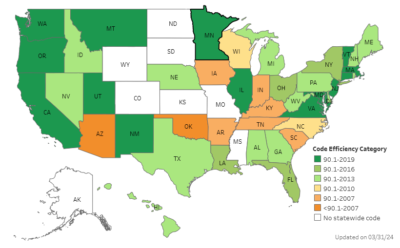
In March 2024, the U.S. Department of Energy (DOE) determined that the 2022 version of ASHRAE/ANSI/IES 90.1, Energy Efficiency Standard for Buildings Except Low-Rise Residential Buildings, saves energy over the 2019 version. As such, this standard became recognized as the new national energy reference standard.
While prescriptive lighting rebates have significantly promoted adoption of energy-efficient lighting and controls, the custom rebate option offers a potentially highly lucrative path, particularly in projects with advanced lighting controls.
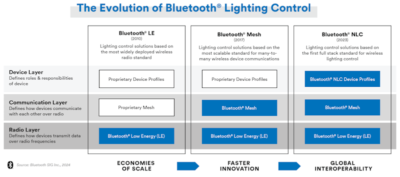
In September 2023, the Bluetooth Special Interest Group (SIG) released Bluetooth® NLC, a series of specifications that define roles and responsibilities for common lighting control devices. Bluetooth NLC builds on wireless standards Bluetooth Low Energy (LE) and Bluetooth Mesh to provide full-stack standardization. By ensuring true multivendor interoperability across the control system, the Bluetooth SIG believes this will enable mass adoption of wireless networked lighting controls in commercial buildings, including small and medium-sized as well as large buildings.
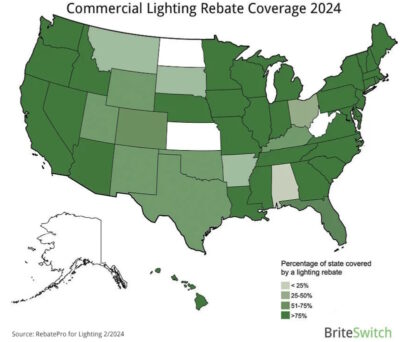
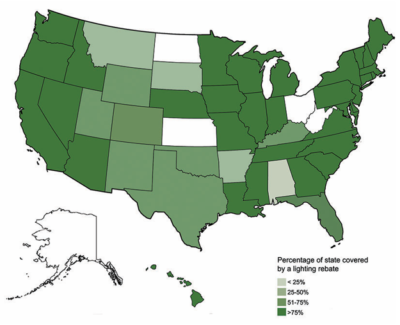
In 2024, commercial lighting rebates remain a strong incentive for adoption of energy-efficient lighting and controls in existing buildings. Notable trends in prescriptive rebates include continuing widespread availability, softening demand for rebate dollars, more bonus programs, generally increasing average rebate amounts, and strengthening of networked lighting control rebates.
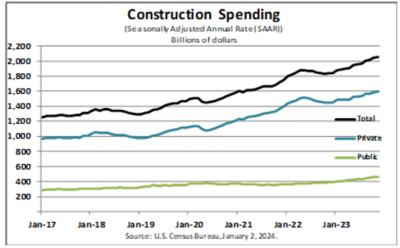
Image credit: U.S. Department of Commerce.
Construction spending is expected to grow in 2024 but at a significantly slower pace, according to the American Institute of Architects (AIA) Construction Consensus Forecast Panel made up of leading economic forecasters. The Panel forecasted that nonresidential construction spending will slow to 4% growth in 2024 and further slow to 1% growth in 2025.
As first-generation LED lighting systems begin to be replaced, a significant opportunity to maximize energy savings by incorporating networked lighting controls is emerging, particularly when HVAC integration is included, according to a new report by the DesignLights Consortium.
Everywhere, we see signs the LED revolution has won. An argument can be made, however, that this mature lighting technology is simply entering its next phase of market opportunity. Call it LED Revolution 2.0.
Image courtesy of Lutron Electronics
Based on a new Lighting Controls Association Education Express course, this article takes a deep dive into the lighting control requirements in the 2021 version of the International Energy Conservation Code (IECC).
The 2016 Paris Agreement called for its nearly 200 signatories to join in limiting global warming to an increase of 1.5 degrees Celsius above pre-industrial levels. This would require carbon emissions to be reduced by about half by 2030 and reach net zero by 2050. To reach this goal, the rate of retrofits in the Global North will need to triple from barely 1 percent to at least 3 percent of stock each year, according to Retrofitting Buildings to be Future-Fit, a November 2022 report by commercial real estate services firm Jones Lang LaSalle (JLL).

Image courtesy of Synapse Wireless
The United States is currently enjoying a dramatic surge in construction in manufacturing infrastructure. This suggests fresh demand for lighting and controls and the expertise to properly apply them to industrial spaces.
Growing demand for plug-in electric vehicles is likely to coincide with the significant adoption of EV charging stations in commercial buildings. If true, the economics of lighting upgrades may change, putting all energy efficiency options on the table, including those previously limited by payback thresholds.
The American Society of Heating, Refrigerating, and Air-Conditioning Engineers (ASHRAE) and the Illuminating Engineering Society (IES) recently published ANSI/ASHRAE/IES Standard 90.1-2022, Energy Efficiency Standard for Buildings Except Low-Rise Residential Buildings. For lighting, the new version adjusts power allowances, adjusts the definition of alterations, adds horticultural lighting, and updates several control requirements.
In 2023, commercial lighting rebates remain a strong driver for adoption of energy-efficient lighting and controls in existing buildings. Notable trends include continuing stability in LED and control rebates, imminent jeopardy for some LED replacement lamp rebates, and growth for networked lighting control and horticultural rebates. A coinciding trend with implications for lighting upgrades is introduction of substantial rebates for electric vehicle (EV) charging stations.
A major contributor to the economy is construction, which overall exhibited very strong growth in 2022. Despite a strong finish to the year, however, nonresidential construction spending is expected to moderate in 2023 and slow significantly in 2024, according to the American Institute of Architects (AIA) Construction Consensus Forecast Panel made up of leading economic forecasters. The Panel forecasted that nonresidential construction spending will moderate to grow a healthy 5.8% in 2023 but then slow to less than 1% in 2024.
The Lighting Controls Association was founded as a council of NEMA back in 2001 to promote adoption of lighting controls through education. Today, the association continues to make a demonstrable difference in supporting public expertise in selecting, designing, installing, and operating lighting control systems. This article outlines the LCA’s accomplishments in 2022 and offers a preview of what’s to come in 2023.
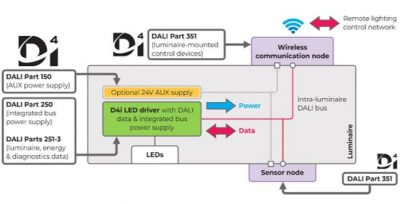
Diagram depicting D4i implementation in an outdoor luminaire with two nodes, one for sensing and the other for wireless communication. Image courtesy of DALI Alliance.
The DALI Alliance recently extended DALI-2, which standardizes interoperability and control of LED drivers and sensors, with a version that more finely addresses the needs of the Internet of Things, which calls for individual device addressability, connectivity, and two-way data exchange.
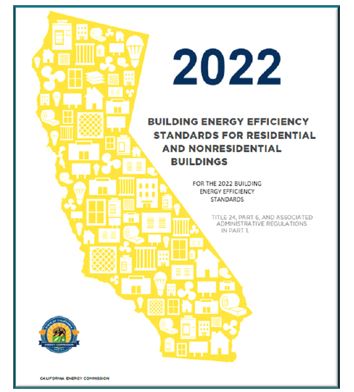
On January 1, 2023, the 2022 version of California’s energy code—Title 24, Part 6 of the Building Standards Code—takes effect, superseding the previous 2019 version. In terms of lighting controls, the numerous changes include various clarifications and tuning along with two major provisions requiring occupant-sensing in offices larger than 250 sq.ft. and demand-responsive lighting controls. Designers and specifiers need to understand these changes before they begin working on code-covered new construction and alteration projects that will go out for permit in California in 2023.
The new incarnation of the Commercial Buildings Tax Deduction offers a strong incentive to stretching energy efficiency in new buildings and modernizing existing buildings. In new buildings, it incentivizes more detailed design and the most advanced control options. In existing buildings, it incentivizes a wide range of lighting and advanced control options that, when coupled with available utility rebates, can substantially reduce initial cost that remains the largest inhibitor to investment in reducing operating costs via energy efficiency.
Next year, the 2019 version of ANSI/ASHRAE/IES 90.1, Energy Standard for Buildings except Low-Rise Residential Buildings, takes effect as the national energy reference standard. This is based on a July 2021 Department of Energy (DOE) ruling that determined the standard saved more energy than the preceding 2016 version. By July 28, 2023, all states must adopt a commercial building energy code at least as stringent as the standard, or justify why they cannot comply.
As lighting controls become more sophisticated in application and capabilities, properly documenting the system’s intent and settings becomes critical. One of the most important documents is the control narrative, including a detailed sequence of operations. Though required by commercial building energy codes as documentation for many new construction and major renovation projects, aside from the Lighting Controls Association, manufacturers, and a few other sources, there are few resources providing guidance about how to write them. Enter the Illuminating Engineering Society (IES), which took on the challenge by publishing ANSI/IES LP-16-22, Documenting Control Intent Narratives and Sequences of Operations in June 2022.
Luminaire-level lighting controls (LLLC), also called embedded controls, are lighting control systems in which sensors and controllers are installed within luminaires to enable autonomous, individual luminaire control. By making each luminaire a control point, control is highly flexible, responsive, and therefore generally more energy-saving. Serving as a preview for an upcoming Education Express course, this article describes LLLC technology, system types, advantages and disadvantages, studies characterizing energy savings and cost, and what’s familiar and distinctive in regards to design and installation.
The commercial market lighting rebate outlook for 2022 is even stronger than 2021, with relatively stable, substantial rebates promoting adoption of energy-efficient lighting and controls.
In 2020, the Illuminating Engineering Society (IES) published ANSI/IES LP-6-20, Lighting Control Systems: Properties, Selection, and Specification. Drawing on the Lighting Controls Association’s Education Express offering as a primary source, this 111-page Lighting Practice and American National Standard provides an excellent foundation for designing with lighting control systems.
According to the AIA Construction Consensus Forecast Panel of leading economic forecasters, nonresidential building construction spending is expected to expand 5.4% in 2022 and strengthen to a 6.1% expansion in 2023.
While networked lighting controls can deliver significant value in both energy and non-energy benefits, a challenge remains in translating these capabilities to one’s applications. What could be done with greater lighting control in my building? How is the system operated to save energy while deriving other benefits specific to my applications? How could the data be used to benefit my stakeholders? To answer this question, let’s look at three theoretical applications.